How Physical Gold Ira can Save You Time, Stress, and Money.
What are the benefits of a retirement account !.?.for gold investments? !? This is actually converting part of your retirement savings to gold. Do you think that a gold-colored individual retirement account is the best choice for your portfolio? Although not all retirement accounts allow gold investments, this article will help you identify the key features of your individual retirement account that could enable you to build a golden retirement nest egg.
Investors are increasingly interested in gold IRAs. These IRAs offer diversification and appeal to investors looking for a retirement portfolio. Moy explains: "Because paper assets are more likely to be moved than gold, adding a IRA in gold provides insurance against inflation." "This balanced technique smooths out risk, especially over the long term, that makes it a clever option for retirement investments like Individual retirement accounts." Moy, who was the Mint's director during his tenure, stated that Individual retirement accounts were not necessary because they are a complex deal that only the most committed investor would be willing to take on.
Moy explains how to get the authorized gold and other valuable metals. Then, you need to transfer the funds to the depository. However, gold IRAs became more popular after the financial crisis in 2008 and the resulting Terrific economic crisis. Record gold sales integrated with the look of a lot more business to handle and streamline the deals have actually made purchasing a gold individual retirement account a one-stop shop.
Some Known Questions About Home Storage Gold Ira.
"The IRS should approve the storage of gold in a designated depository." Also, the IRS does not allow bullion or other specie to be stored in safe deposit boxes or home safes. Moy also states that all other rules regarding IRA contributions, dispensations and taxes are applicable. The gold in a gold individual retirement account must be kept in an IRS-approved depository; you can't keep it in a safety deposit box, home safe, or under your bed mattress.
This is the financier's responsibility. Established custodians are likely to have connections with over 100 dealerships in the country and may be open to sharing that list. It could also work in the reverse. Johnson states that some metal dealers may recommend an individual retirement account custodian. Customers are always happy to search for custodians independently. Moy states that selecting the right business can be complicated because it is a specialized task, which major brokerage firms usually don't do.
Only work with a company that is licensed and registered. For more information and confirmation, ask for the licenses. Some expenses are unique to owning gold in a gold IRA. An investor will be charged the following: "Although gold is at a fixed rate, there are markups depending on whether you want gold bullion or coins, evidence, and so forth." Sentell states.
"Likewise, each form of gold presents its own set of requirements when an investor has to sell," he adds. This one-time fee will be charged to open your new IRA. This fee can vary from one institution to another, but it could be more than the standard setup charge because not all financial institutions handle gold IRAs.
The gold must be stored by a qualified storage centre for which storage fees are charged. If you are looking to close your individual retirement gold account by selling your gold, a third-party dealer will pay less than what it pays on the open marketplace.
Best Gold Ira for Dummies
This issue, nevertheless, can be ameliorated by taking the overall quantity of your RMDs from other standard IRAs. Checkbook-IRAs. One way to avoid having a Custodian and the associated expenses is to open a "checkbook" individual retirement account. This account can be self-directed and doesn't need custodial oversight.
The rollover process for any other retirement plan is the same. Usually, you submit an application online or by paper. The account is usually created within 24 to 2 business days after receipt. "Once the signed transfer request is received by all celebrations, the two custodians will communicate with each other to transfer the funds to the brand-new custodian and fund a new gold IRA," states Gottlieb.
Gottlieb adds, "You tell them which type of gold you want to purchase and prices are secured at the time." Gold's Special Dangers All investments come with risks and rewards. But gold is unique. Moy notes that gold IRAs come with the same risks and rewards as any other investment. "The price of gold can fluctuate and change, as well as its volatility.
Any physical product is subject to theft. The depository where your gold is stored could be accessed by someone else. However, in order to be approved for Individual retirement accounts with gold, depositories must be guaranteed. This would protect your financial investment, as long as it doesn't exceed the stated value of accounts. Moy states that there are also unreliable custodians that may take from consumers' accounts or commit fraud by selling rare-earth elements they don't have or are not planning to purchase.
Gold has the potential for a high return but it's easy to be blinded. Gold costs can plummet all of a sudden. When gold is increasing, you also have to decide whether you 'd be purchasing ator close tothe top of the marketplace if you invest at that point. It might be more sensible to wait.
The stock market is at levels you might consider frothy, especially during these unpredictable times. Some investors and owners of IRAs might worry that their accounts are too exposed to equities. They are not alone. Close to zero interest rates make CDs, Treasuries and money-market funds the best investments for earnings.
The Internal Profits Code, which we love so much, seems to contradict the idea that an IRA can contain physical rare-earth properties. As a guideline, any individual retirement account investment in any metals or coins counts as an acquisition of a collectible item. The deal is therefore characterized as a taxable circulation by an individual retirement account followed immediately by a purchase by the individual retirement accounts owner (that would be you).
Our Congress made an important exception in the general guidance. The exception states that IRAs can invest in particular gold, silver, and platinum coins and in gold, silver, platinum, and palladium bullion that meets relevant pureness requirements. Nevertheless, the coins or bullion should be held by the IRA trustee or custodian rather than by you as the individual retirement account owner.
Gold, Star Trust Business and the Entrust Group are all examples of rare-earth element individual retirement accounts trustees. Trustees who are willing to take responsibility for physical storage of rare earth element assets belonging to IRAs will be able to do so. One significant storage facility is Delaware Depository in Wilmington, Delaware. The cost of setting up a valuable metals individual retirement account trustee is typically $50 to $100. There will also be an annual administrative charge or upkeep charge to send account statements, etc. (maybe $50 to $300 or a number based on account value). Additionally, there will be a cost for storage or insurance that could cost $100 to $300.
The 30-Second Trick For Physical Gold Ira
This would, as we discussed in the beginning of this column lead to a considered taxable circulation from the individual retirement accounts under the federal earnings-tax rules. Bad. The good news, however, is that the internal Revenue Service had actually indicated that individual retirement accounts are allowed to purchase shares in precious metals ETFs. These ETFs are considered grantor financial investing trusts and have no such issues.
This was apparently the SPDR Gold Trust GLD, +1. 31%, which is the most popular gold ETF. In PLR 200732027, the IRS ruled that IRAs might purchase shares in a silver ETF. This was the i. Shares SLV Trust SLV. 59% is the most-popular silver ETF.
A person's standard Individual retirement accounts (consisting of any SEP-IRAs and easy IRAs) need to have sufficient liquidity to permit for RMDs. That stated, RMDs require not be taken from each IRA. The only requirement is that you withdraw the appropriate amount (a minimum of) throughout the year from one or more accounts. One IRA might be invested in rare-earth elements bullion, while the other account may have liquid assets such as openly traded stocks or shared funds.
3. 8% NIIT. Some states may also use it for their earnings taxes. You don't have to give up gold bars, precious coins or rare-earth element-bullion. You could also bury them in the backyard, although I would advise against this.
The price of gold rose to all-time highs during the summer. However, there were many advertisements encouraging you to invest in gold via an individual retirement account. Most likely, you are aware that gold is a collectible. Individual retirement accounts are not allowed to own collectibles. Both of these ideas are true. Although gold is a collectible item, you can legally own it through an IRA.
The American Eagle coins certify as do some bullion coins issued by the states. Canadian Maple Leafs may be kept in an IRA. The exception does not apply to South African Krugerrands or British Sovereign Coins. Older U.S. coin types, such as Double Eagles, don't need to be certified. Bullion bars or rounds of gold, silver, and bullion are permitted an IRA if the age is 99.
You can't utilize individual retirement account money to buy the metals and keep them on your own. You must have an IRS-approved custodian. Also, you can't transfer coins or bullion from your individual retirement account to another person. This is a restricted deal. An IRA owner can't buy or offer transactions to the IRA.
You should carefully research the custodians, paying attention to how long they have been in business and the fees they charge. You should find a custodian willing to give you a fair rate, without charging a large margin.
ETFs can also purchase, shop and guarantee gold at a lower price than an IRA custodian. The Internal Revenue Service has issued Private Letter Judgments stating that IRAs can own ETFs. You can read the "Tax Dangers” area in the prospectus of any ETF to see all the details.
Gold Ira Reviews Things To Know Before You Get This
Coins or bullion usually are held by people who are concerned about a currency collapse and want an alternative type of currency offered to them. If that is your goal, you do not want to own gold through an individual retirement account, you wish to have it in your possession or nearby. You would like to own it other than an IRA.
Briefly, this is when you set up a real self-directed individual retirement account with a custodian. The LLC manages the investment. Because the LLC deals through regular brokerage accounts or inspecting accounts rather than through the custodian, it can help avoid significant fees.
According to the Internal Revenue Service, rare-earth element ownership must remain with a custodian. It is most likely that the LLC will purchase them, and you retain them as your own. This would be considered a prohibited transaction or financial investment. These rules are applicable to all types IRAs: Roth, standard, SEP, SIMPLE.
Although it is legal to hold gold and silver in an individual retirement plan or pension, it isn't the most efficient or effective way to acquire these valuable metals. You might be better off investing the individual retirement account in a precious metals ETF or owning rare-earth elements in a https://satoritradersllc.blogspot.com/2021/10/can-i-buy-gold-with-my-ira-satori.html taxable account.
How are rare-earth elements stored in the Buffalo Proof Dutch 10 Gilder British Britannia You can keep them separated or mixed depending on the retirement account provider. Non-segregated storage allows for coins of similar weight and purity to be mixed, while segregated storage protects them from being contaminated by other products.
You will receive a sales order from us. This will be forwarded to your individual retirement account custodian. The individual retirement account custodian will then forward us the funds, and Gainesville Coins will process and deliver the precious metals to the pertinent depository or independent storage facility.
Once you have identified the precious metals broker you want, you will need an executed Buy Direction Letter Rareearth Elements. Vantage Investment Experts will work with you to purchase the metals that you have chosen in your IRA. For valuable metals purchased within your individual retirement accounts, there is an additional $75 transaction cost.
You can fill out and submit a Selling Instructions Letter Precious metals with a Circulation type. At that point, you have the option to choose between a money or an in-kind distribution.
Two tax-free and non-penalized ways to transfer money between your pension are the 60-day rollover option or the trustee-totrustee transfer. Your present individual retirement account provider will mail a check to you if you choose the 60-day rolling option. American Hartford Gold can be mailed the check. You will not be charged any taxes or fees if the check is sent to us. It will be transferred into your account in 60 days.
Our Account Executives are available to assist you in any way we can.
As an individual retirement account holder you have the right to choose the valuable-metals dealer and the product that interests you. Individual retirement account Innovations is not able to offer any products or promote vendors. The depository you choose is up to you. Individual retirement account Innovations is different from many self-directed individual retirement plan administrators. You can choose any precious metals storage centre.
Gold Ira Reviews Fundamentals Explained
Are appropriate for reputable trademarks. Both the U.S. and Canadian mints make 1 oz. platinum coins satisfying these requirements. Australia and Fantastic Britain also have 1 oz. platinum coins, which are not as widely known but are likewise acceptable. You can keep valuable metals in many different forms.
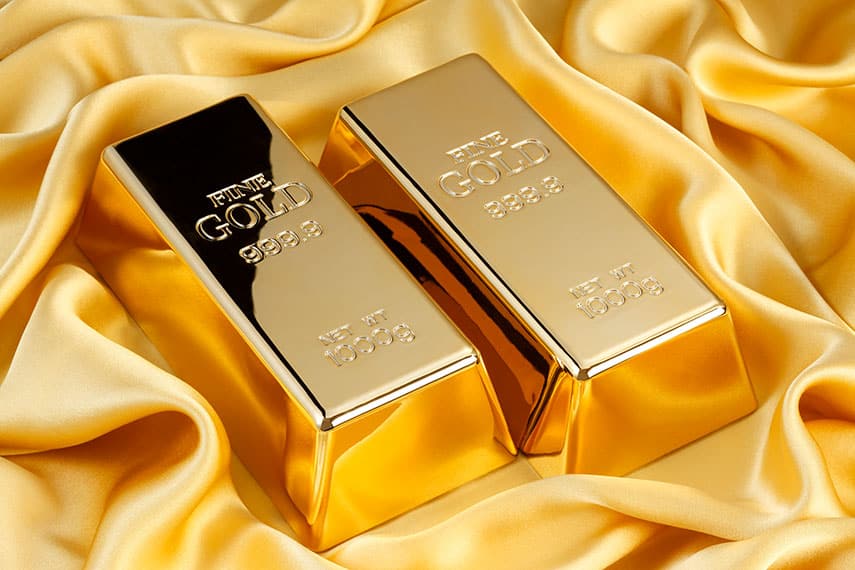
It guarantees that the bars are kept in a separate vault from other metals. The identification numbers of bars are determined by their size, refinery, and identification number (e.g. 100 oz). PAMP Swiss gold bar SN # 35427681). The bar that was originally deposited will still be in place when the metal is removed from the depositor.
The size/weight of a bar is determined by refinery. A 100 oz. JM silver bar The bar will be exactly the same size as the original bar when it is released from the depository. It will have been made from the same refiner. A type and the year that they were minted are what identify coins, such as a 1992 American Silver Eagle.
Over the past several years, gold rates has actually fallen drastically. A 2012 financial purchase in gold would have produced an annualized, pretax loss greater than 14%. The volatility of commodities consisting of gold, however, is only part of the story. For tax purposes, gold investments that are physical are considered collectibles. Gains on an antique held for less that one year are subjected to normal income.
The 28% maximum collectors tax rate is far higher than 15% long-lasting capita gain (LTCG), that applies to most other assets. (With a 20% optimum LTCG Rate applicable to high income taxpayers in tax years commencing after Dec. 31, 2012, the LTCG rate will only be used to taxpayers with tax years beginning after Dec. 31,2012). If gold were a capital property, and taxed at a 15% rate on capital gains, its 12% annual pretax return has dropped to 10%.
This post will focus on taxation and gold investing. However, it can also be used to analyze rare-earth elements such as silver, palladium, and platinum that are considered collectibles. Although gold is a popular investment, its ownership has been limited for many years. In 1933, President Franklin D. Roosevelt signed Executive Order 602, making it illegal for more than a small percentage to own gold bullion and coins.
In the beginning, only a few gold coins and bars were available as investment options. You can invest in gold today in many ways. Some examples are shown in Display 1. When you think of gold investing, bullion bars and gold coins are often on your mind. Coins have the advantage that you can trust the purity and weight of the coins because they are credible.
The spot price is the cost of one troy ounce of gold on the major world products markets. The difference in between the purchase price and the market price is the spread, or markup, that sellers take as profit. Physical gold can also be stored at an additional cost.
ETF shares represent a small amount of physical gold, usually one-tenth of an troy ounce. ETFs offer financiers the opportunity to buy and sell physical gold just like they would with stock. Transaction costs are low. Another benefit of gold ETFs is that financiers are not responsible for keeping the gold, although a lot of ETFs charge a yearly fee ranging from 0.
CEFs mean that long-lasting investments in financial assets are taxed more as LTCGs than as antiques. This can allow for higher after-tax returns. CEFs that are not U.S.-based have more complex federal tax reporting due to the fact they are passive foreign financial investing companies. The tax complexities are beyond the scope of this article. However, you can mitigate them by electing to be certified under Sec.
Investments in physical gold and physical ETFs, outside of an IRA or IRA, are treated as collectibles. Any gain made by a gold financial investor that is held for longer than one calendar year will be taxed at normal earnings rates, with the exception of a maximum tax rate 28%. In 1974, individual retirement accounts became legal. Investments in antiques were banned (Sec.
This restriction is overcome by using an intermediary who meets the requirements for a trustee under Sec. 401(a), which allows physical gold to be held at a cost. Many individual retirement account trustees for gold charge a flat administration fee plus storage fees. All fees are between $150 and $300 per annum.